

Welcome to MLOps25 – the 1st ECAI Workshop on MLOps
As data-driven AI reshapes industries worldwide, deploying AI models into production environments poses unique engineering challenges that extend far beyond model development. The rise of large language models (LLMs) has further amplified these challenges, requiring innovative strategies to handle computational complexity, dynamic behavior, and real-world integration. Bridging the gap between experimental prototypes and robust, scalable AI systems demands specialized practices, tools, and methodologies.
Machine Learning Operations (MLOps)—and its recent extension for large language models (LLMOps)—has emerged as an essential framework for addressing these challenges, providing systematic methods to streamline the entire ML lifecycle. This workshop aims to bring together researchers and practitioners from academia and industry to explore operational challenges, cutting-edge advancements, practical implementations, and emerging trends in MLOps. Featuring interactive discussion sessions, peer-reviewed paper presentations, and invited keynotes, the event will encourage active engagement and collaboration.
We look forward to your participation and contributions! Please visit our call for papers for submission details.
Important Information
📍 Venue: Plesso di Ingegneria (Engineering Faculty) – Room 0.7, Viale Risorgimento 2, 40136 Bologna, Italy
⚠️ Note: Navigation systems may suggest incorrect entrances. Registration desk is at the address above.
🚶 From city center: 25 min walk mainly under Bologna’s famous porticos (recommended route)

Thomas Vrancken
Thomas is a Machine Learning Engineer and consultant with several years of experience helping organizations bring ML systems into production. He studied at Maastricht University and worked across a variety of industries and roles at YGroup (now Metyis), Philips R&D, and ML6 — one of Belgium’s leading ML consulting companies. He is now also a lecturer at the University of Liège, where he teaches a course on ML Systems Design.
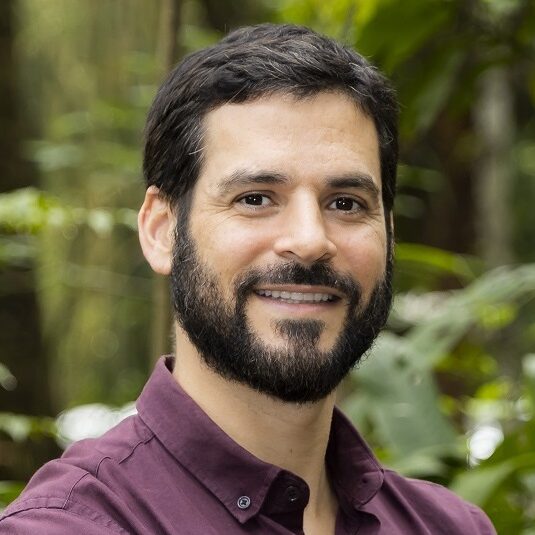
Marcos Kalinowski
Marcos Kalinowski is a Professor of Software Engineering at PUC-Rio, Brazil. His research focuses on AI Engineering, Experimental Software Engineering, and Human Aspects of Software Engineering. Before transitioning to academia, he accumulated over a decade of industry experience. He co-leads the ExACTa PUC-Rio lab, where he supervises PhD research and leads R&D projects with industry partners to develop AI engineering solutions and real-world AI systems. His lab’s work has resulted in award-winning AI deployments and multiple US patents. He has authored several books and over 200 research publications, earning 19 distinguished paper awards, including ACM Distinguished Paper Awards at ICSE and CAIN. He holds a research productivity distinction from the Brazilian Research Council (CNPq) and an honorary ‘Scientist of the State’ distinction from Rio de Janeiro’s state research agency (FAPERJ). He serves the community as associate editor of the Journal of Systems and Software, editorial board member of the Empirical Software Engineering journal, and as part of the organizing and program committees of several international conferences. He is an active member of ACM, IEEE, ISERN, and the Brazilian Computer Society.